ANC Earbuds Guide: Ear Tip Passive Seal, Occlusion Effect, and Real-World Battery Drain
Explore ANC earbuds through ear-tip fit, the occlusion effect, and a mode-by-mode battery comparison. Use the listening checklist to assess your next pair.
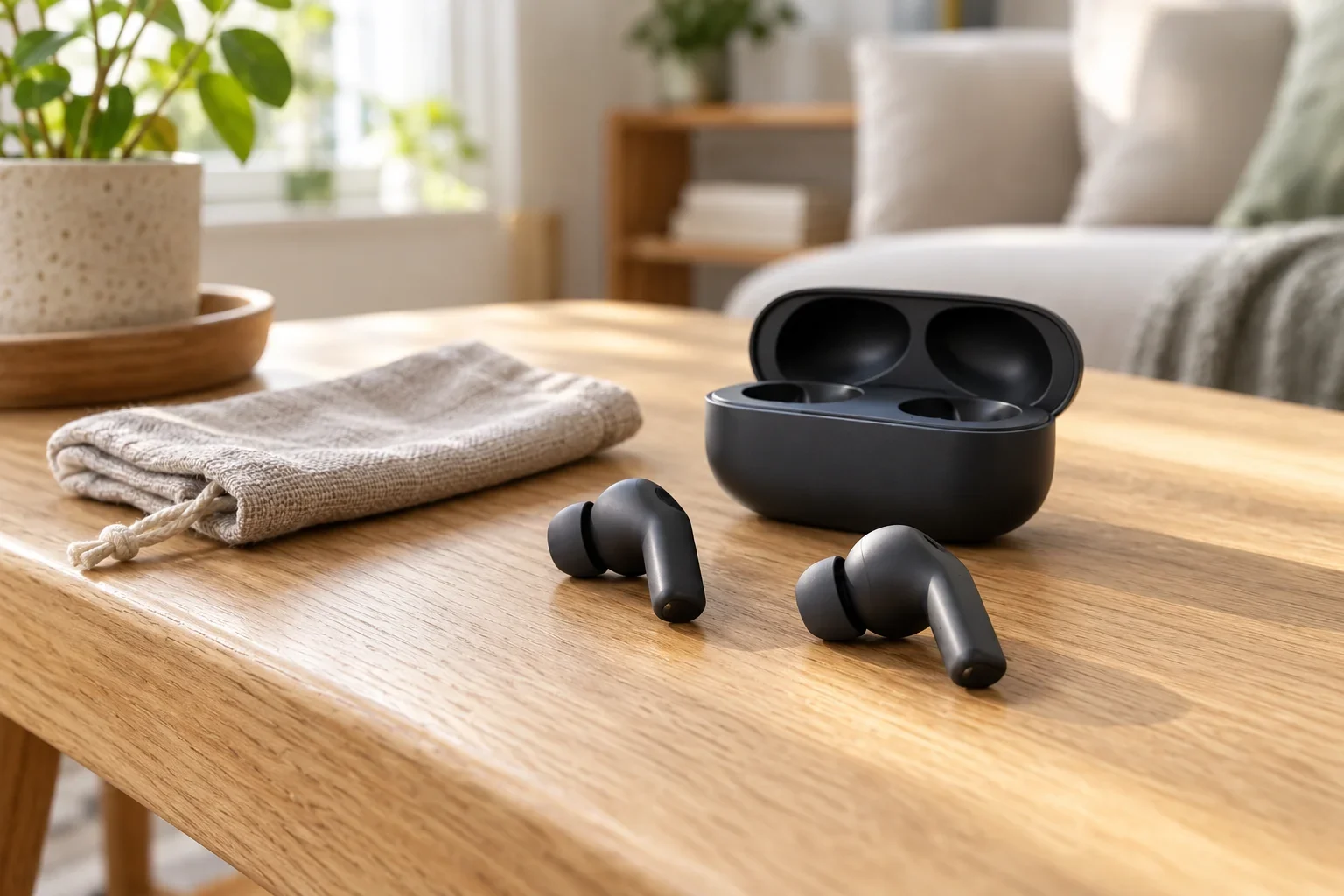
When choosing ANC earbuds, start with the ear-tip fit, then assess speaking comfort and the battery settings you intend to use. For AirPods Pro, a correct ear-tip fit improves noise cancellation and gives music a rich bass sound.
Use this guide to work through seal, occlusion, and runtime separately. For the wider gift shortlist, explore our portable audio and wearables hub.
Passive seal and active noise cancellation
Passive noise reduction relies on physical obstruction rather than electronic components. A passive noise blocker requires no power source.
On the Sony WF-1000XM5, noise canceling generates antiphase sound to reduce surrounding noise. Its noise canceling function works primarily on low-frequency noise such as vehicles and air conditioning. Noise is reduced but not completely canceled.
What does hybrid ANC mean?
Use the microphone arrangement to understand the terminology for active noise cancelling earbuds.
- Feedforward ANC uses an externally facing microphone.
- Feedback ANC uses an internally facing microphone.
- Hybrid ANC combines feedforward and feedback techniques using externally and internally facing microphones.
For hybrid ANC earbuds battery life, compare the specific model and its listening settings in the runtime section below.
Check the ear-tip seal and comfort
For AirPods Pro, ear tips should make a good seal with the ear canal.
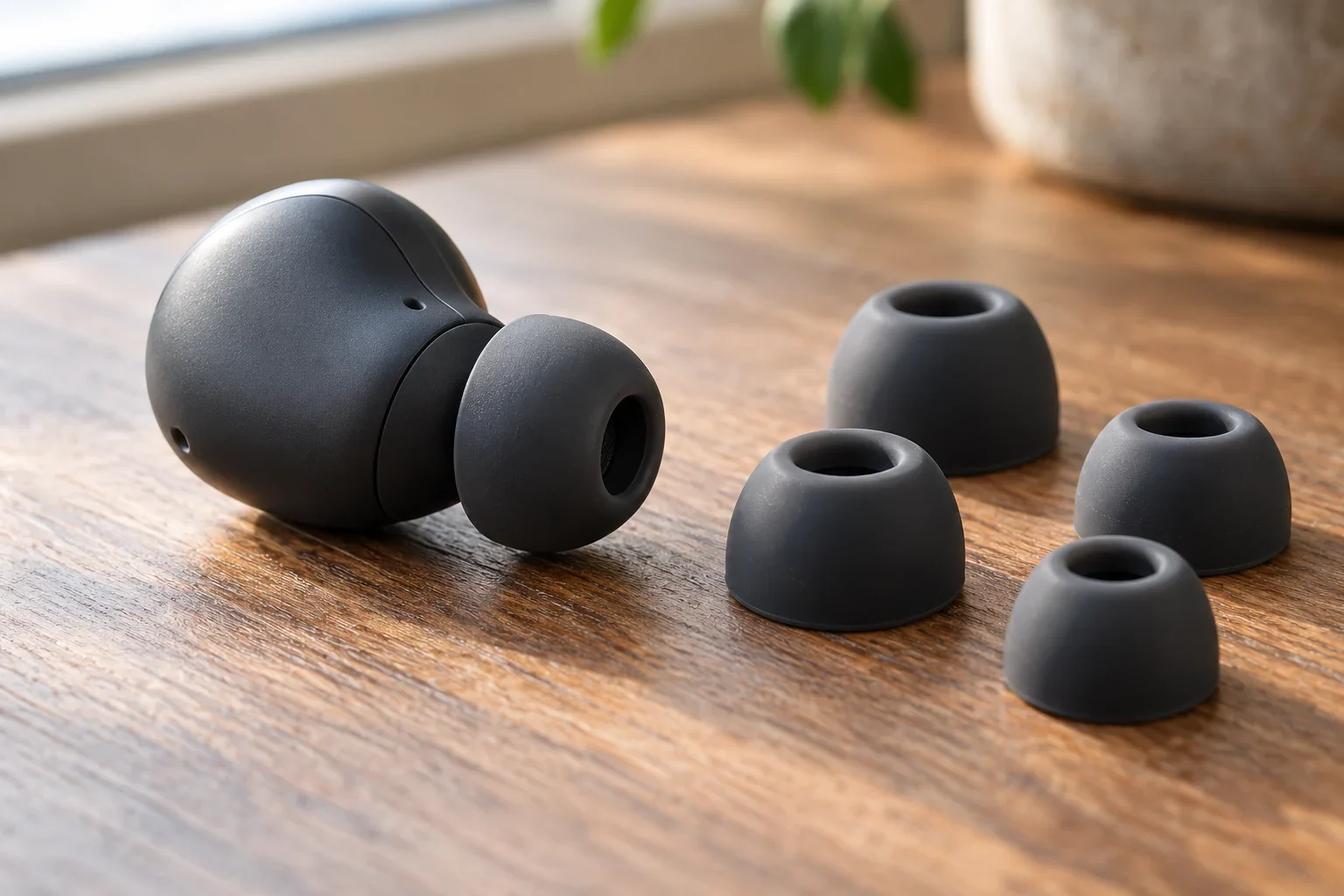
Apply the following AirPods Pro fit guidance when assessing that model:
- If you can’t get a good seal, try adjusting the AirPod or switch to a larger ear tip.
- If the ear tip feels too large in your ear or is uncomfortable, try a smaller ear tip.
- You might need different sizes for your left and right ears.
When fitting the supplied Sony WF-1000XM5 earbud tips, wait for about 10 seconds for the earbud tip shape to stabilize. The model’s optimal-earbud-tip function measures the air-tightness of the earbud tips.
Record the tip choice for each ear. Include your comfort while speaking in that assessment; use the next section to understand the term “occlusion effect.”
ANC earbuds and the occlusion effect
In Phonak’s hearing-aid fitting explanation, the occlusion effect is a sensation of increased loudness caused by bone-conducted low-frequency amplification through the cartilaginous portion of the ear canal.
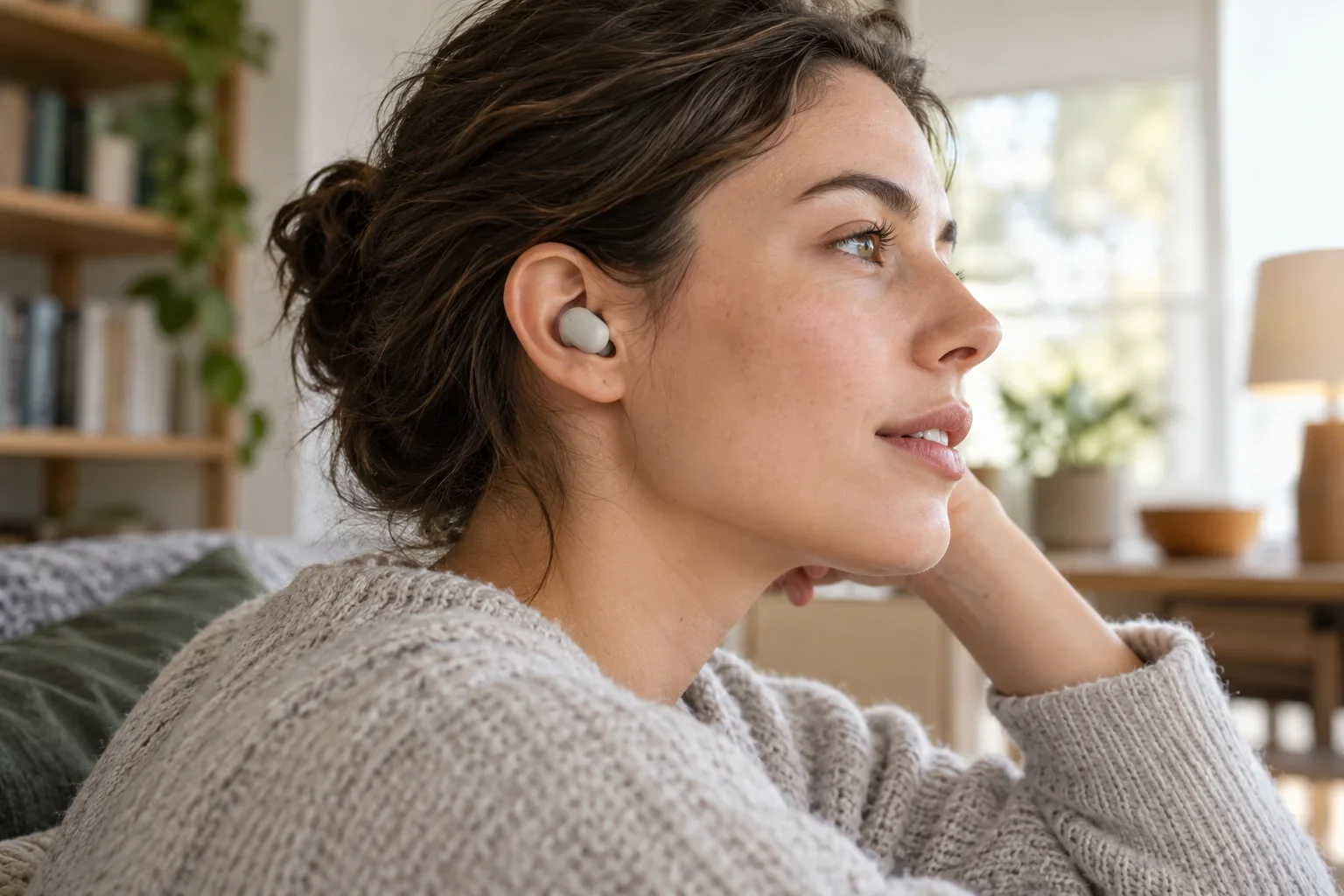
In a study of bone-conducted sound in normal-hearing participants, in-ear headphones gave the highest occlusion effect while fully open headphones gave the least.
In hearing-aid fittings, vented earpieces and open domes reduce the occlusion effect. In that fitting context, open fittings limit the achievable output level of low-frequency amplification because of low-frequency leakage.
For your earbud shortlist, keep separate notes on external noise, music, and how your own voice feels. During a listening check, speak naturally and record whether you like the experience. Compare your notes with the comfort and seal checks above before settling on a tip choice.
Battery life: compare the same codec and mode
Use the Sony WF-1000XM5 music-playback figures below as a model-specific comparison. Read each entry with its codec and mode.
The figures are maximum operating times from a fully charged headset.
“Both off” means noise canceling and Ambient Sound Mode are off.
| Codec | Noise canceling on | Both off |
|---|---|---|
| LDAC | Max. 5 hours | Max. 8 hours |
| AAC | Max. 8 hours | Max. 12 hours |
| SBC | Max. 8 hours | Max. 12 hours |
| LC3 | Max. 7 hours | Max. 11 hours |
Choose the codec you plan to use, then compare the mode columns within that row. For a call-heavy routine, use the communication figures separately:
- Sony WF-1000XM5 communication time with noise canceling on is Max. 6 hours.
- Sony WF-1000XM5 communication time with noise canceling and Ambient Sound Mode off is Max. 7 hours.
What to record for real-world battery drain
For the Sony WF-1000XM5, usage hours may be different from the stated times depending on the settings for the headset functions and usage conditions.
On this Sony model, DSEE Extreme is among the settings that shorten the stated battery operating time. Equalizer is also among the settings that shorten the stated battery operating time. The left or right unit acts as the main headset unit and consumes its rechargeable battery faster than the other unit.
Make a listening record with the model name, codec, noise-control mode, extra audio settings, music or calls, and your observed runtime. For a repeat check, keep those choices the same. Compare your observations with the matching manual entry before changing your setup.
Your listening checklist
Before choosing a pair for yourself or as a gift, work through these questions:
- Which ear tips did you choose for each ear?
- Are you happy with the fit while listening and speaking?
- How do you feel about your own voice with the earbuds in place?
- Which codec and noise-control mode will you use?
- Will your routine involve music, calls, or a mixture?
- Which battery entry matches that setup, and what runtime did you observe?
Keep the answers with your shortlist. Continue exploring the portable audio collection or use our routine-based gadget comparison guide to organize the gift decision.
Sources
- Apple Support — Choose your AirPods Pro ear tips
- Bose — How Do Noise Cancelling Headphones Work?
- Sony — WF-1000XM5 Help Guide: What is noise canceling?
- Razer — Active Noise Cancelling Technology
- Sony — WF-1000XM5 Help Guide: Wearing the headset
- Phonak — ActiveVent Receiver field study
- Trends in Hearing / PMC — The Effect of Stimulation Position and Ear Canal Occlusion on Perception of Bone Conducted Sound
- Sony — WF-1000XM5 Help Guide: Available operating time
Related Gift Buying Guides
Bone Conduction Headphones Guide: Transducer Clamping Force, Sound Leakage, and IP Rating
Compare open-ear bone conduction headphones by condyle clamping force, 250–500 Hz bass vibration, phase-cancellation sound leakage, and IP55 vs. IP68 water ratings.
Read buying guide
Waterproof Bluetooth Shower Speaker Guide: IPX7 vs IP67 Ratings and Bathroom Acoustics
Compare IPX7 and IP67 speakers using manufacturer water-care rules, secure mounting, speech controls and fully dry charging connections.
Read buying guide
How to Choose a Phone Charger as a Useful Gift
Choose a phone charger by device requirements, supported charging profiles, shared port output, cable compatibility and safe placement.
Read buying guide