Compare Gadget Gifts by Routine, Compatibility & Complete-Kit Cost
Compare technology gifts by the recipient’s routine, device compatibility, physical fit, complete cost and return options.
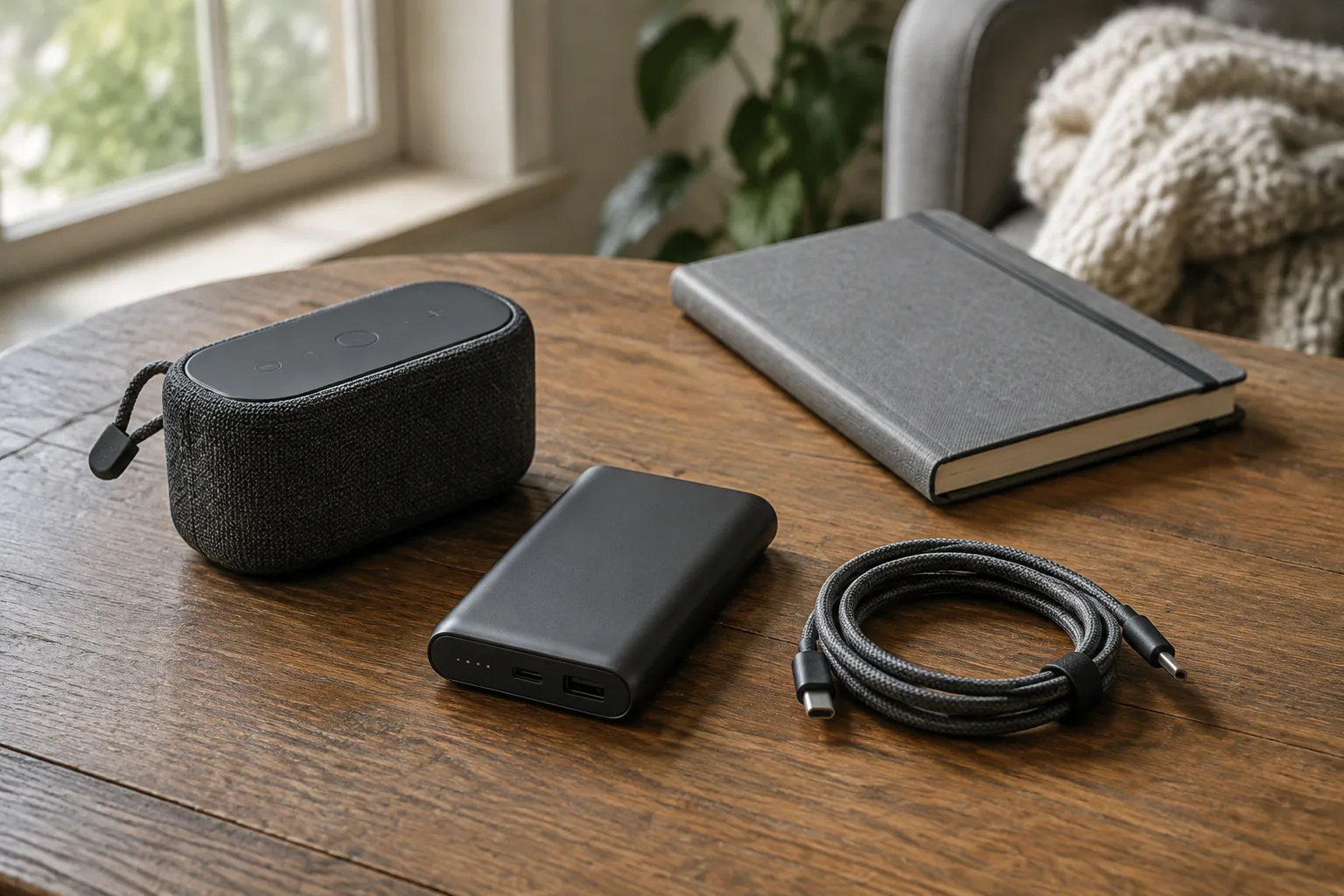
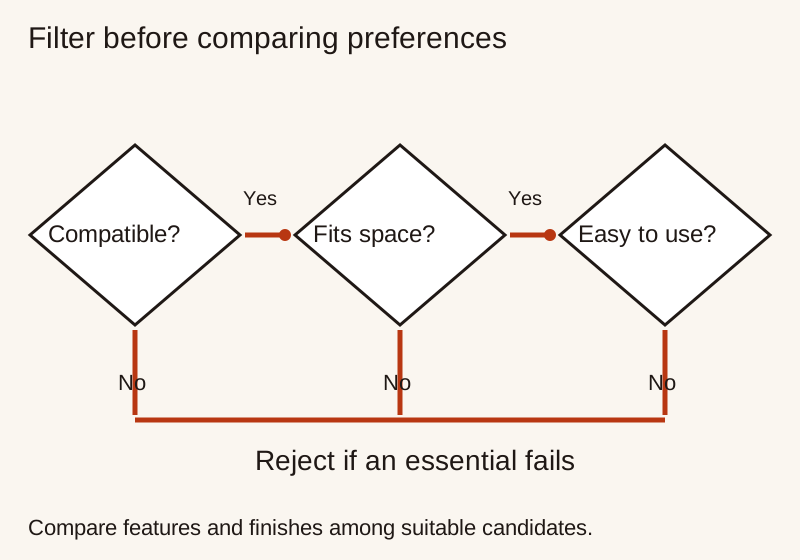
To compare gadget gifts, first eliminate products that do not fit the recipient’s devices, space or essential needs. Then compare the effort of using each surviving option and its complete cost. Choose the product with the clearest everyday purpose, not the longest feature list. A low price cannot compensate for a connection that will not work.
Write the recipient’s brief before opening product tabs
A useful brief describes an occasion, a setting and a constraint. “Something for a person who likes technology” leaves almost every product in contention. “A way to keep a phone visible during recipe preparation, on a small counter that gets cleared each evening” suggests a much narrower set of requirements. The second brief also gives you a reason to reject an attractive item that needs permanent installation.
Ask what already works. The recipient may have a favorite pair of headphones, a well-organized charging kit or a carefully chosen keyboard. Replacing an established preference is different from solving an unmet need. If the current arrangement is satisfactory, an accessory that supports it may be more welcome than a replacement that asks the person to change habits.
Keep the brief to three lines: the recurring job, the known setup, and the biggest inconvenience to avoid. Leave unknowns visible. It is better to write “phone model not confirmed” than to build a comparison on a guess. If you are still choosing a category, start with our routine-based technology gift guide before comparing individual products.
Separate dealbreakers from preferences
A dealbreaker prevents the gift from doing its intended job. A preference affects how enjoyable it is once the job is possible. Mixing the two is the main weakness of a simple points system: a product can accumulate points for color, packaging and price while failing the only connection the recipient needs.
For a charging accessory, exact device compatibility belongs in the first group. Finish and cable color usually belong in the second. For a desk stand, sufficient space and support for the intended device may be essential; a matching surface finish may be optional. Make those distinctions for this recipient instead of assuming every buyer needs the same checklist.
Use three statuses for essential requirements: confirmed, failed and unknown. Failed options leave the shortlist. Unknown options pause until evidence resolves them. Do not award an unknown a half score and hope it will work. A comparison becomes more useful when it tells you what to investigate next, not merely which product has the most green cells.
Check the whole connection, not just a connector photo
Record exact model names and the required task. Charging a phone, transferring files and connecting a display are different jobs even when a shopping page shows a familiar port. Look for the manufacturer’s description of that task rather than inferring capability from the shape of a socket.
The USB-IF cable guidance makes this distinction explicit: cables have different capabilities, and certification of a cable does not add capabilities to connected products. Its USB-C cable program distinguishes power and data markings. For your comparison, keep separate fields for the cable, the source device and the receiving device. A strong specification for one component does not verify the entire setup.
Apple’s iPhone fast-charge documentation provides a concrete model-specific example. It distinguishes USB-C connections for iPhone 15 and later from USB-C-to-Lightning connections for earlier models, and identifies adapter requirements. It also describes test conditions. This is why “works with iPhone” is weaker evidence than documentation that addresses the recipient’s actual model and intended charging setup.
The same investigation habit applies beyond charging. For a smart-home gift, confirm the desired function with the existing household system rather than relying on a platform logo alone. Our smart-home compatibility checklist identifies the questions to resolve. When a listing and a manual disagree, save both and ask the manufacturer which applies to the exact model revision being sold.
Compare effort over three moments
Picture the first ten minutes after the present is opened. What must happen before the person gets value? A stand may need only unfolding. Another device might require an account, an app, a firmware update or an additional accessory. These steps are not automatically unreasonable, but they should be intentional parts of the gift rather than surprises.
Next, imagine a normal use a week later. Does the person need to move a cable, clear a surface, find a remote or reconnect a device? A minor action repeated every day can matter more than a feature used once. Write the action down in plain language instead of compressing it into an unsupported “easy to use” score.
Finally, consider recovery after something goes wrong. Can the ordinary cable be replaced? Can someone find the manual without remembering where the packaging went? Is there a documented reset process? You do not need to predict every failure; you need enough information to avoid giving a product whose basic upkeep is unclear.
This three-moment view is especially useful for shared households. A gift that works smoothly for the account owner may confuse everyone else. Ask who needs to use it, whether physical controls are available for the required function, and whether the recipient wants responsibility for managing it. Do not create accounts or accept services on their behalf as part of a surprise setup.
Calculate the complete gift cost
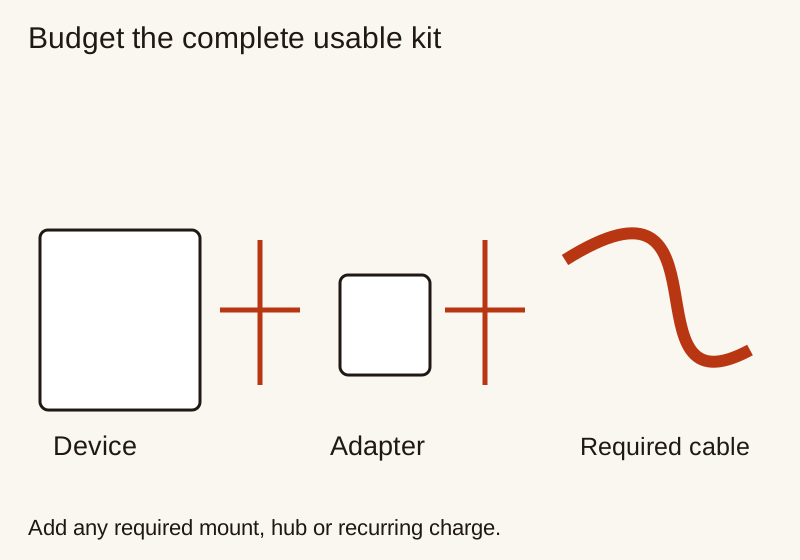
Start with the purchase price, then add only the items necessary for the promised job. These might include a suitable cable, a mounting accessory or a wall adapter. Distinguish a genuinely optional accessory from one required to make the gift usable. Check the included-items list instead of assuming that an object visible in a lifestyle photograph comes in the box.
Keep continuing costs separate. If a desired function requires a subscription, record the price and billing period shown by the provider at the time of purchase. Ask whether the recipient wants that commitment. Do not quietly turn a one-time gift into a future bill. If there is a usable free mode, describe exactly which planned functions remain available in it.
For a portable battery, also investigate the equipment needed to recharge the battery itself. Our power bank gift guide walks through that complete chain. For a workspace accessory, the desk gift guide helps identify space and placement costs that a checkout total will not capture.
Work through a shortlist without false precision
Candidate One has a confirmed fit with the case, folds flat and has ordinary packaging. Candidate Two looks better in the kitchen but does not document its case clearance. Candidate Three fits but needs a cable and adapter for a charging feature the recipient did not ask for. A generic feature count might favor Three. The recipient’s brief points elsewhere.
Pause Two and seek the missing dimensions. Compare One and Three on storage, stability evidence, controls if any, and complete cost. Do not infer stability from weight alone or from a promotional image; look for a usable return arrangement if you cannot establish the practical fit before purchase. If One satisfies the job with fewer unwanted extras, that is a defensible choice even without a numerical score.
Now change the brief: the recipient wants the phone to charge while displayed at a permanent desk. Three deserves renewed consideration, while folding flat may matter less. The product has not changed; the job has. That is why a comparison should end with a conditional conclusion, not a claim that one gadget is universally best.
Use a short worksheet and keep the evidence beside it
For each finalist, record the exact model, the essential-fit decision and one evidence link. Add the main recurring chore, the complete cost and the largest unresolved question. A note on your phone is sufficient. The purpose is to preserve the reasoning when several similar product names begin to blur together.
- Intended job: What should the recipient be able to do?
- Confirmed fit: Which document or measurement supports that conclusion?
- Everyday effort: What must happen each time the product is used?
- Complete cost: What is needed immediately, and what could recur?
- Tradeoff: What does this option give up compared with the other finalist?
- Uncertainty: What still needs an answer before buying?
Treat manufacturer documentation as evidence for stated specifications, not independent proof that a product is pleasant to use. Treat customer reviews as leads for questions, not controlled measurements. If several reviewers mention an awkward control, investigate the control layout and return conditions; do not convert those reports into a made-up failure rate.
Make the final choice easy to explain
Finish this sentence for each finalist: “This is the better gift if the recipient values…” If the sentence only describes a discount or a feature count, return to the brief. If it names a real routine and an acceptable compromise, you have a reasoned choice. When two options remain genuinely equivalent, personal taste can make the final decision without pretending to be a technical advantage.
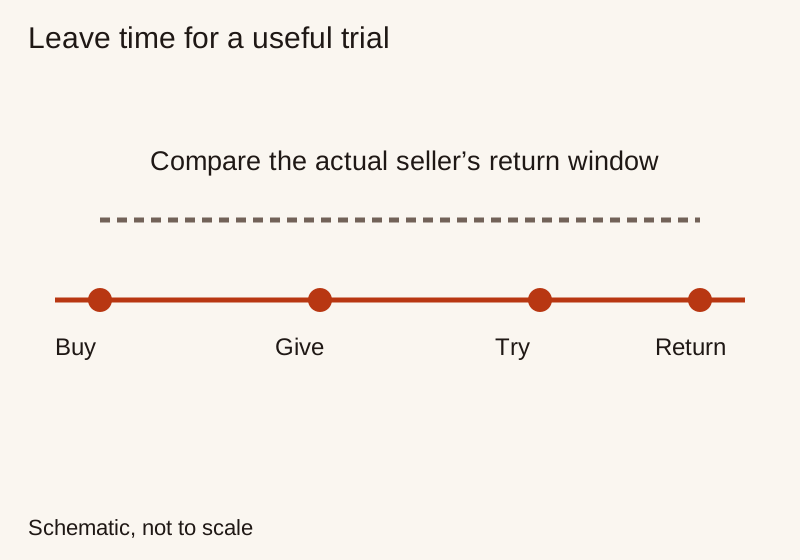
Keep the receipt, exact model information and any essential setup notes. Check the seller’s actual gift-return conditions before purchase, especially when the present will be opened later. Leave the recipient room to exchange it. The strongest comparison is not one that makes the buyer feel certain at any cost; it is one that makes the choice understandable and leaves a sensible way to correct a mismatch.
Research and update note
Related Gift Buying Guides
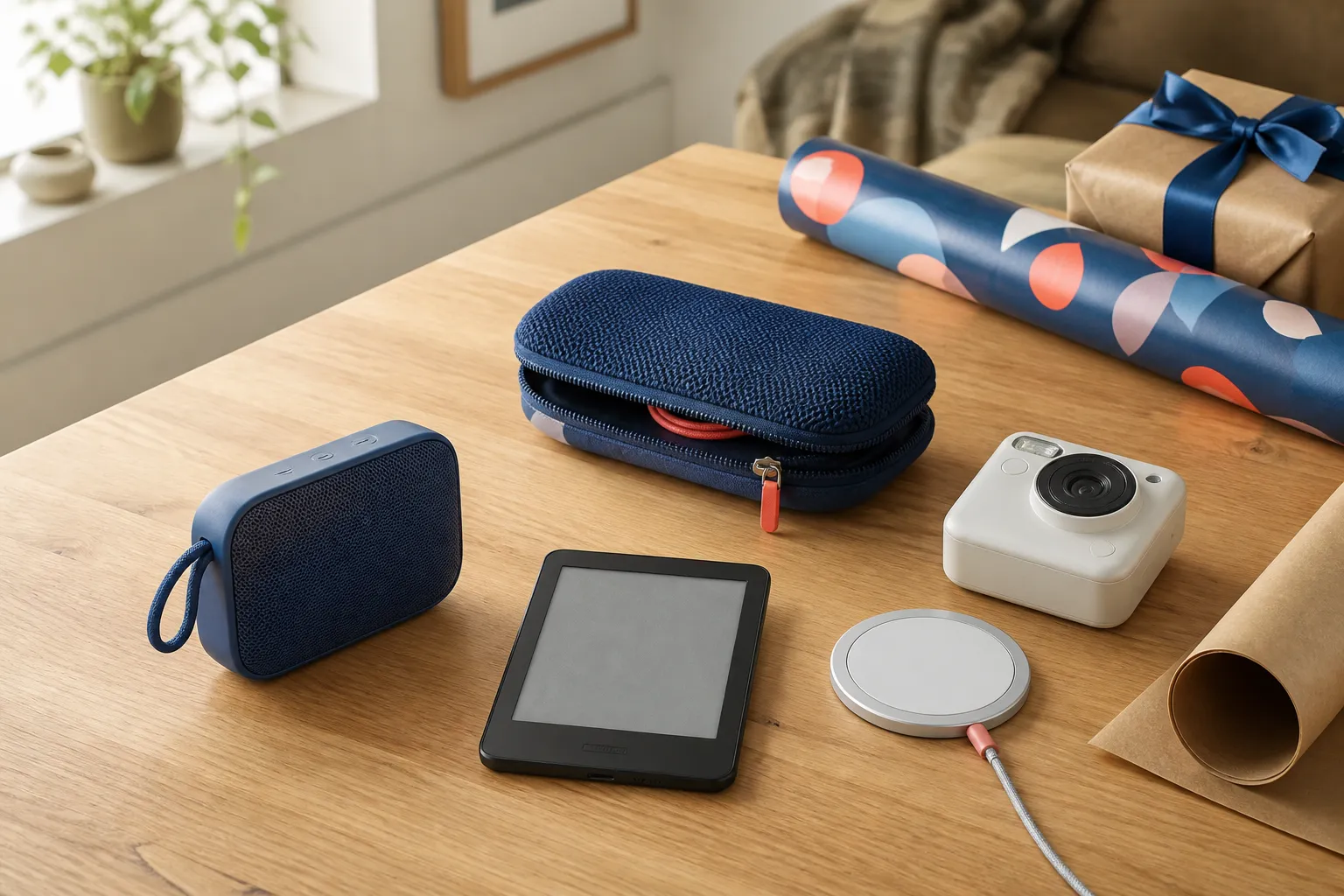
Useful Tech Gifts That Fit Into Real Life
Find a useful technology gift by starting with the recipient’s everyday routine, existing devices, available space and preferred controls.
Read buying guide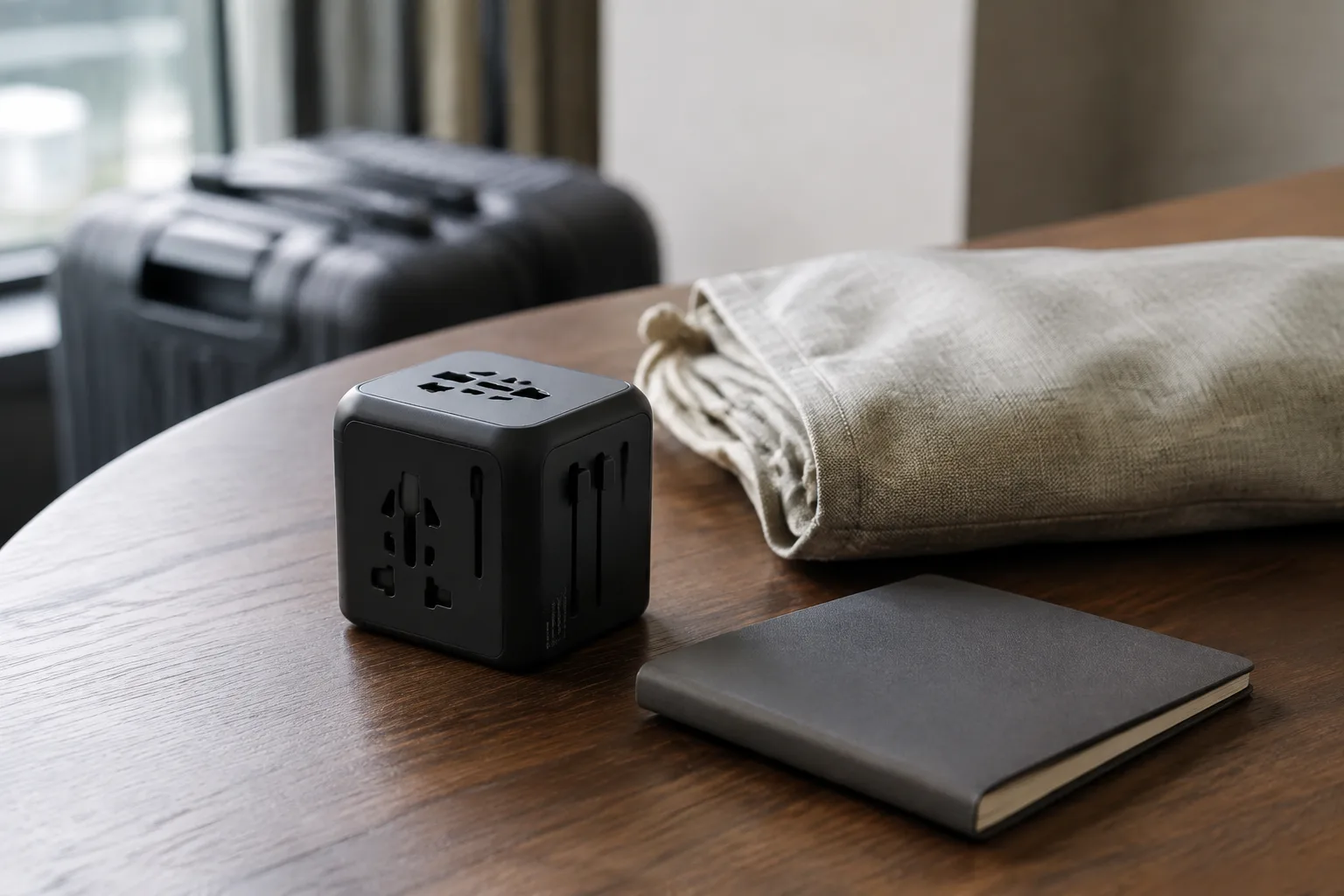
How to Choose a Travel Adapter as a Useful Gift
Choose a travel adapter by destination socket, appliance input label, earth connection, rated load and any required USB charging output.
Read buying guide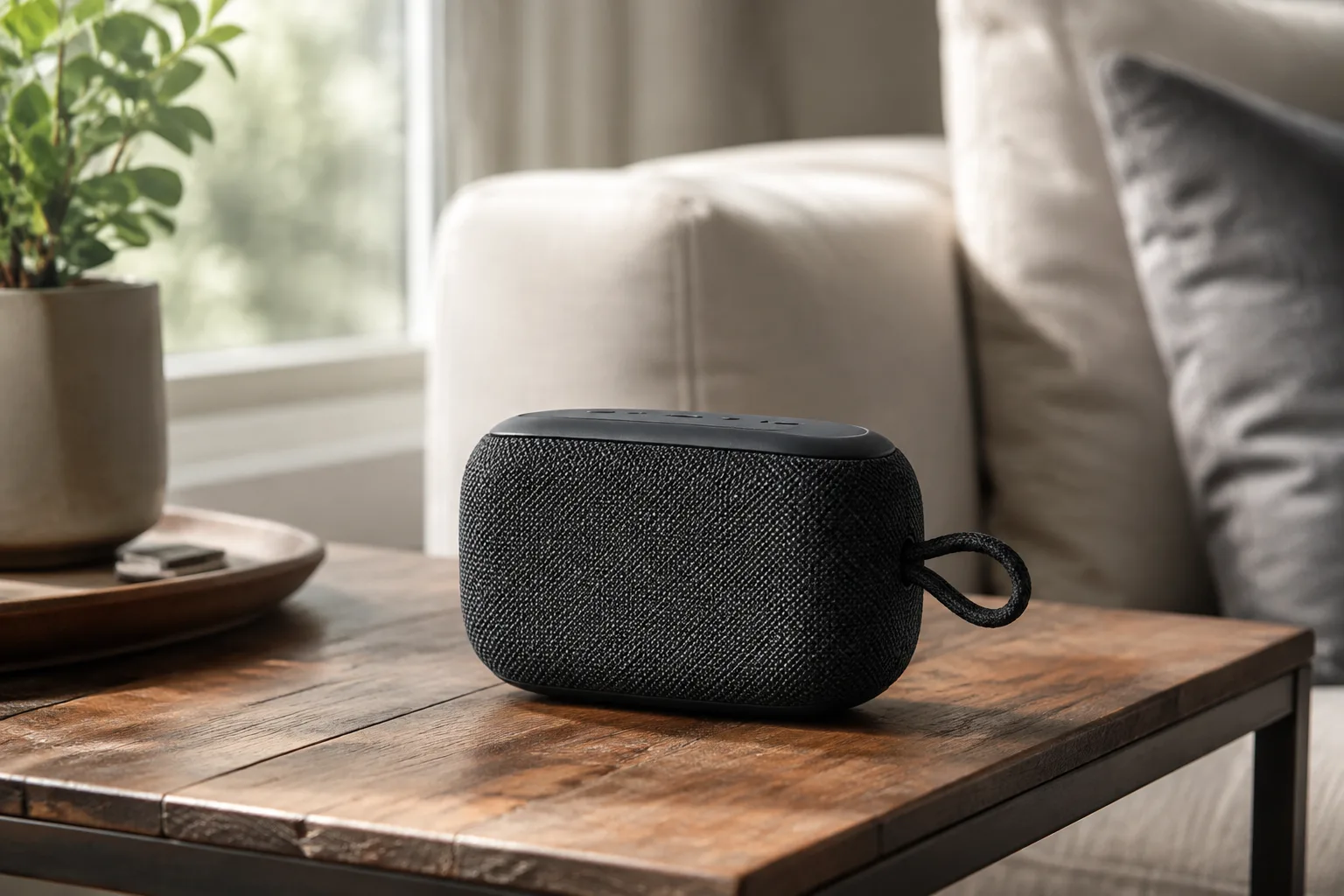
How to Pick a Portable Speaker as a Gift
Choose a portable speaker by listening space, controls, device connections, carrying shape, runtime conditions and water-care instructions.
Read buying guide