How to Choose a Travel Adapter as a Useful Gift
Choose a travel adapter by destination socket, appliance input label, earth connection, rated load and any required USB charging output.
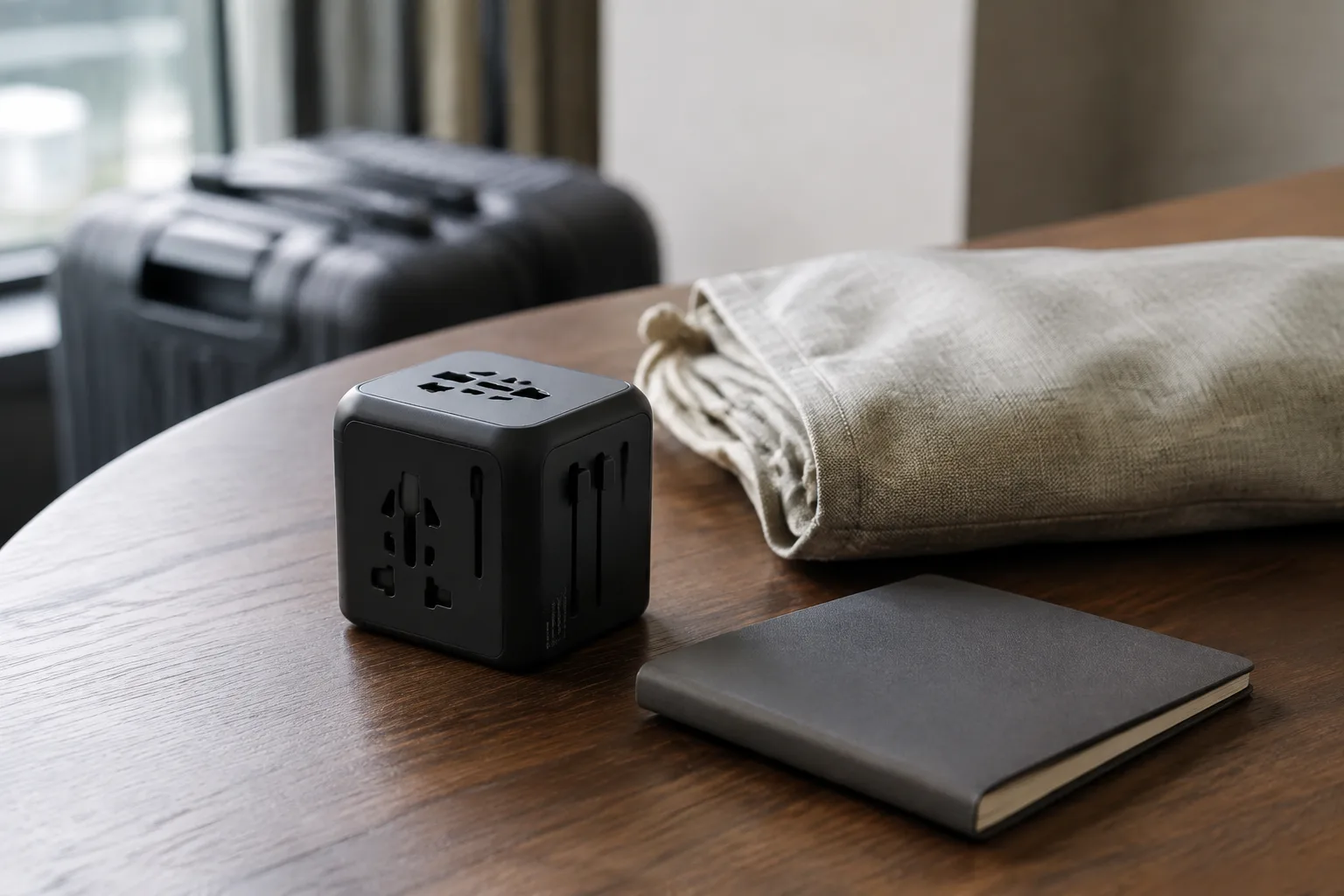
A travel adapter gift should match the recipient’s actual destinations and the equipment they will take. Check the destination supply and socket, the appliance or charger’s input label, and the adapter’s stated limits. A plug adapter changes the physical connection; it should not be assumed to convert voltage or frequency. If any essential requirement is unclear, resolve it with the manufacturer or a qualified professional before use.
Start with the actual itinerary
Write down each country where the recipient expects to use the gift, including an overnight stop where they may charge devices. Avoid treating a continent or a broad marketing region as a complete destination list. Ask what kind of accommodation they will use and what equipment the host confirms is available, without assuming that every room has the same outlets.
Separate confirmed travel from imagined future trips. A frequent traveler may want a flexible kit, while someone taking one known journey may prefer fewer parts. Neither is automatically the better gift. Compare the equipment that serves the real itinerary before paying for functions that may never be used.
Do not reproduce a country-to-plug table from memory. Check current destination information from an appropriate authoritative source and, where necessary, confirm the actual outlet arrangements with the accommodation. A broad country guide is a planning aid, not evidence about every socket the traveler might encounter.
Distinguish plug adaptation from electrical compatibility
Electrical Safety First’s travel-adaptor guidance states that travel adaptors do not convert voltage or frequency. It also highlights destination socket differences, rated limits and earth-connection requirements. A device physically fitting into an adapter therefore does not establish that the complete arrangement is appropriate.
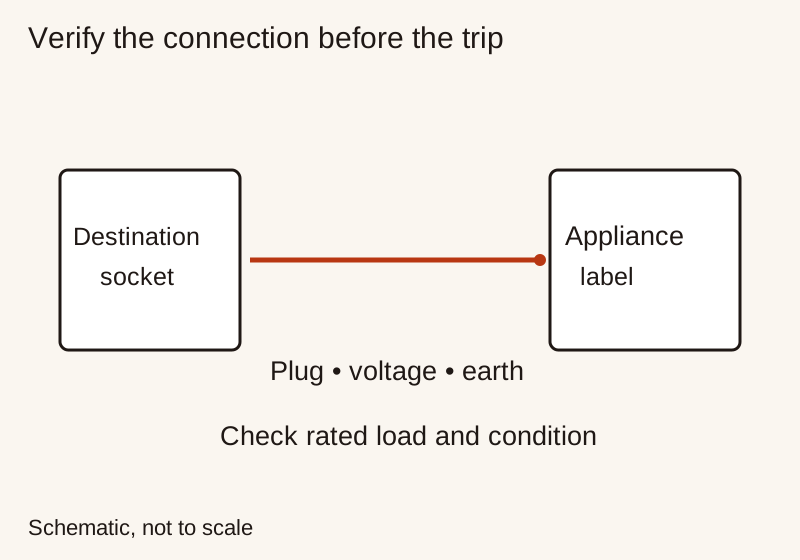
Keep the questions separate in your shopping notes. One line describes the plug and socket connection. Another records the supply requirements of the appliance or power adapter. A third records the travel adapter’s documented suitability and limits. Leaving those questions separate helps prevent a photo of matching pins from becoming an unsupported answer about electrical use.
If the appliance requires something beyond plug adaptation, do not improvise a solution by stacking additional accessories. Ask the appliance maker what is appropriate for the exact destination and device, or consider an alternative provided at the destination. The gift should not depend on the recipient experimenting with an unfamiliar electrical arrangement.
Inventory the equipment, not just the devices
List what the traveler will actually plug into mains power. A phone may be charged through a separate USB adapter; a camera may have a separate battery charger. The relevant input label is on the item connected to the supply, not simply the portable device’s battery label. Keep the exact model details with that inventory.
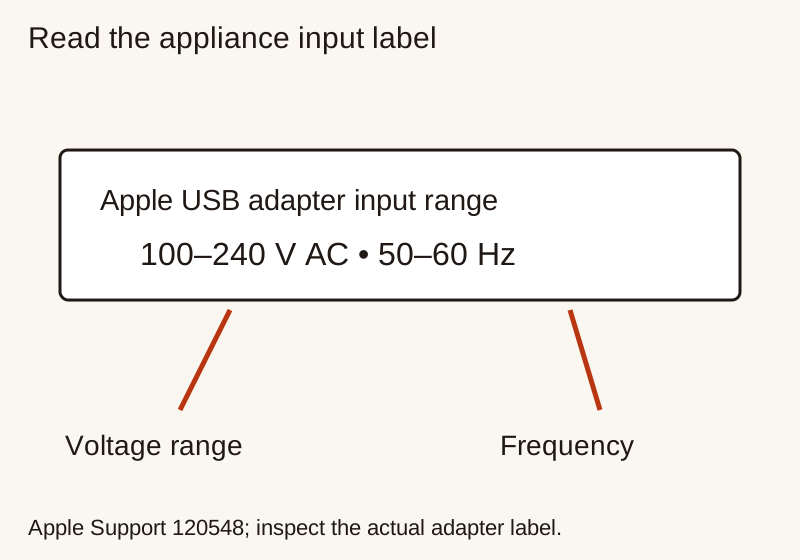
Record the input voltage and frequency information exactly as printed, together with the manufacturer’s instructions. Do not infer a worldwide input range from a USB port or a familiar brand name. If the label is unreadable, obtain the official specification rather than filling the gap with a common-looking value.
Apple’s USB power adapter overview, for example, describes its USB adapters as designed for 100–240 V AC at 50–60 Hz. Check that the exact adapter’s label supports the destination supply and that the adapter is in good condition.
Treat high-demand and unfamiliar appliances separately
Ask whether the traveler plans to take anything besides their ordinary electronics charging kit. A gift chosen around a phone charger should not quietly become permission to connect every appliance the recipient owns. Read each item’s own requirements and the travel adapter’s allowed uses.
If a device has instructions for selecting a voltage or a special travel arrangement, follow the manufacturer’s guidance rather than a generic buying article. If you cannot confidently establish what is required, leave it out of the proposed kit until the maker or a qualified professional clarifies it. Use a qualified professional for appliance conversion or electrical modification.
Consider whether the accommodation can provide the relevant appliance instead. That can simplify the packing brief, but verify availability rather than assuming it. The aim is to reduce uncertainty before departure, not to make the traveler discover missing or incompatible equipment after arrival.
Verify earth requirements and rated limits
Electrical Safety First notes that some travel adaptors are not suitable for appliances requiring an earth connection, and that an appliance must not exceed the adapter’s stated rating. Do not defeat a required earth connection or treat an adapter’s ability to accept a plug as proof that it preserves the required arrangement. Follow the exact product instructions.
Record the intended appliance and the relevant limits together. If the documentation does not clearly address that use, ask the manufacturer before purchase. A marketplace description such as “universal” is not a substitute for the supported connection and rating information.
For products involving the UK plug and socket system, BSI’s BS 8546 overview describes a travel-adaptor specification and notes that the adapters within its scope do not convert voltage. Use the appropriate requirements for the product and market; the existence of a standard does not itself prove that a particular listing complies with it.
Separate the AC socket from built-in USB outputs
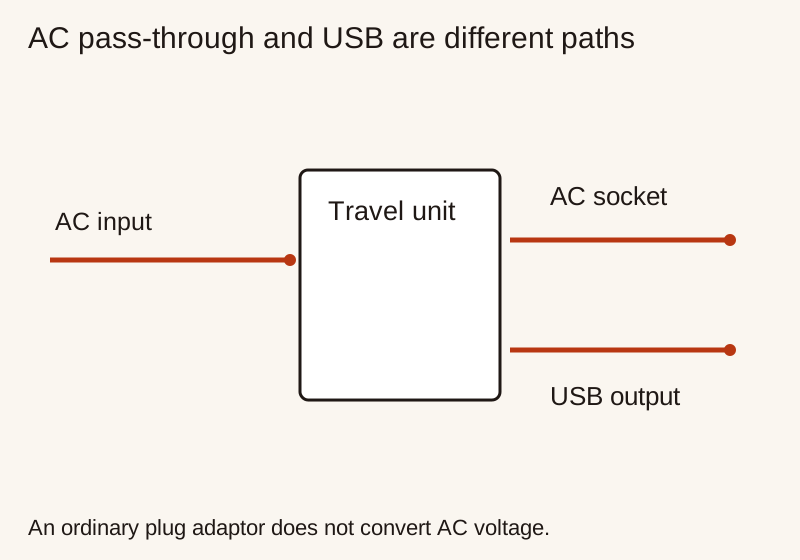
Some travel products combine a plug-adaptation function with USB charging outputs. Read the specifications for each function independently. Do not assume that a prominently advertised USB output figure describes what is available through the AC socket, or that the physical socket function answers how the USB ports behave.
For built-in USB charging, check the recipient’s phone requirements, cable and intended simultaneous use. A multi-port unit needs documented output information for the combination the traveler expects. Our phone charger gift guide explains that part of the comparison, including the distinction between total and per-device output.
If the recipient already has a well-documented charging adapter they like, a suitable plug-adaptation arrangement may be enough. If the goal is to reduce the number of separate items, compare the combined product as a complete replacement and verify every required function. Fewer objects in the bag should not mean fewer checks.
Compare a single-trip kit with a multi-stop kit
Imagine someone taking one confirmed trip with a phone and a camera charger. Their brief begins with the two actual power adapters, destination details and a convenient way to keep the required pieces together. A large collection of plug options may be unnecessary if a smaller, documented arrangement serves that trip.
Now imagine someone making several confirmed stops with the same equipment. Their brief needs a destination-by-destination check and a clear way to identify the correct components. A modular kit can be considered, but the traveler must know which pieces belong to the chosen product and how the manufacturer says they are used. Do not mix components from unrelated kits based on appearance.
In either case, decide where the kit will live between uses. Count detachable pieces, check the packed dimensions and include any case or cable that genuinely needs to travel. A compact body can still make an awkward package once its required parts are included. Our USB-C cable guide helps choose a useful cable route and packed length without guessing capability.
Make the documentation part of the gift
Create a short inventory note naming the exact products and the trip they were selected for. Link to the manufacturers’ instructions and record any unresolved question. Avoid labeling the kit “works everywhere,” because that invites uses that were never checked.
Keep detachable parts together with the original instructions. Do not remove markings or make physical modifications to make the product look tidier. If someone helps prepare the kit, the traveler should still understand what each piece is for and where to find the product’s limitations.
The note is a memory aid, not a substitute for the labels and manual. A later trip, replacement charger or newly added appliance should trigger a new check. The fact that a kit served one journey does not establish suitability for every future destination or device.
Check the seller and allow time before departure
Choose an identifiable product with accessible instructions and a seller that provides clear order and return information. Electrical Safety First recommends reputable retailers and checking adapters for damage. Review relevant manufacturer or official recall information for the exact model, including any instructions for affected serial numbers.
Buy early enough to inspect the supplied model and package contents without rushing at departure. Resolve missing parts, mismatched variants or unclear documentation with the seller or manufacturer. Do not wait until the traveler is in another country to discover that the order differs from the researched product.
Check the gift-return period against the date the present will be opened. Keep the receipt available and let the recipient exchange the kit if their equipment or itinerary differs. Our gadget comparison guide helps compare complete required cost rather than rewarding an inexpensive but poorly documented offer.
Know when a different gift is more useful
If the itinerary is undecided and the device requirements are unknown, you may not have enough information to choose an electrical travel accessory responsibly. Ask the recipient for the missing details or choose a gift that does not depend on them. Surprise is not more important than a properly understood use.
If the real inconvenience is running low between outlets, a power bank is a different category with its own compatibility and transport requirements. If the recipient already has a complete travel setup, return to the general technology gift guide rather than adding another adapter without a clear purpose.
Related Gift Buying Guides
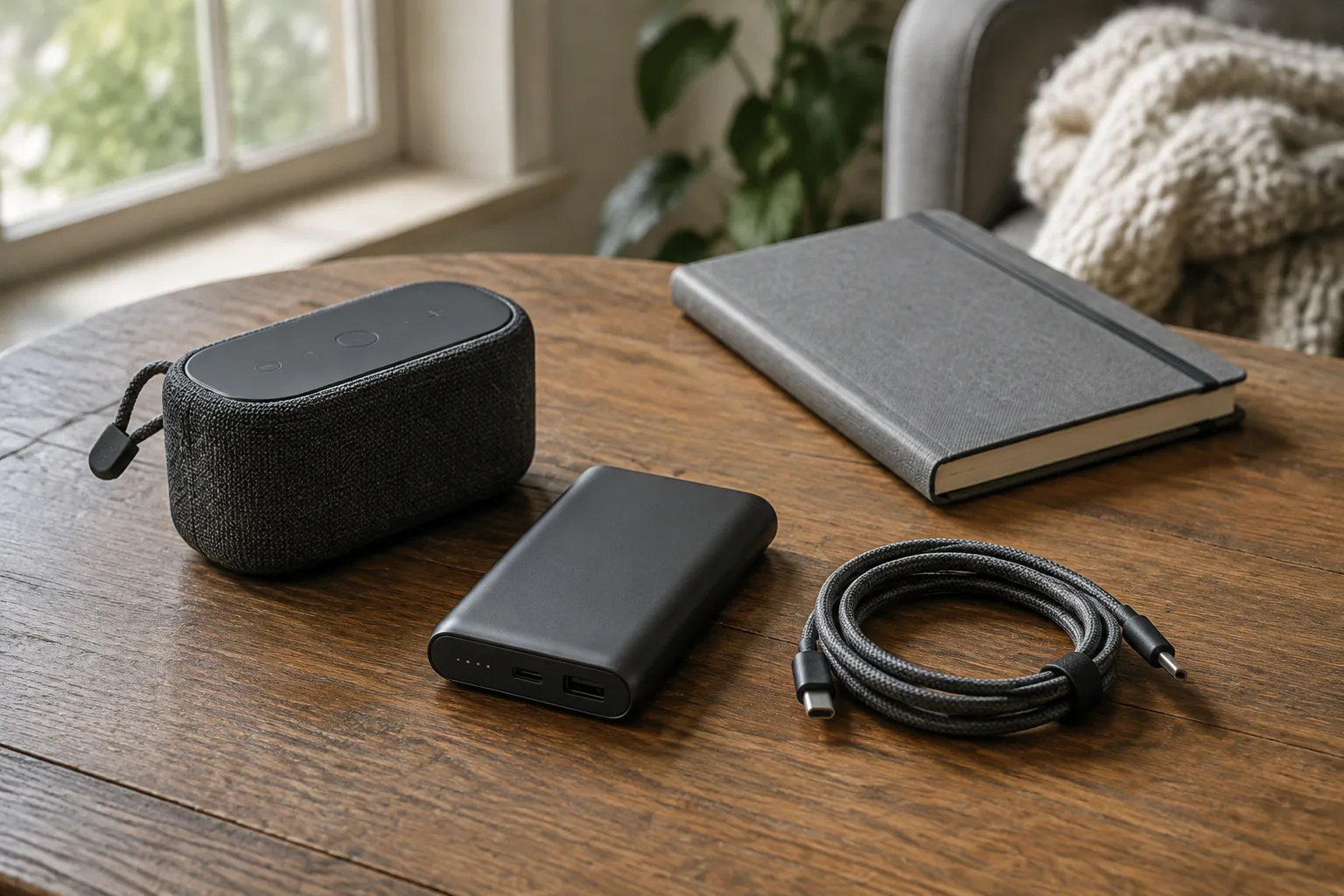
Compare Gadget Gifts by Routine, Compatibility & Complete-Kit Cost
Compare technology gifts by the recipient’s routine, device compatibility, physical fit, complete cost and return options.
Read buying guide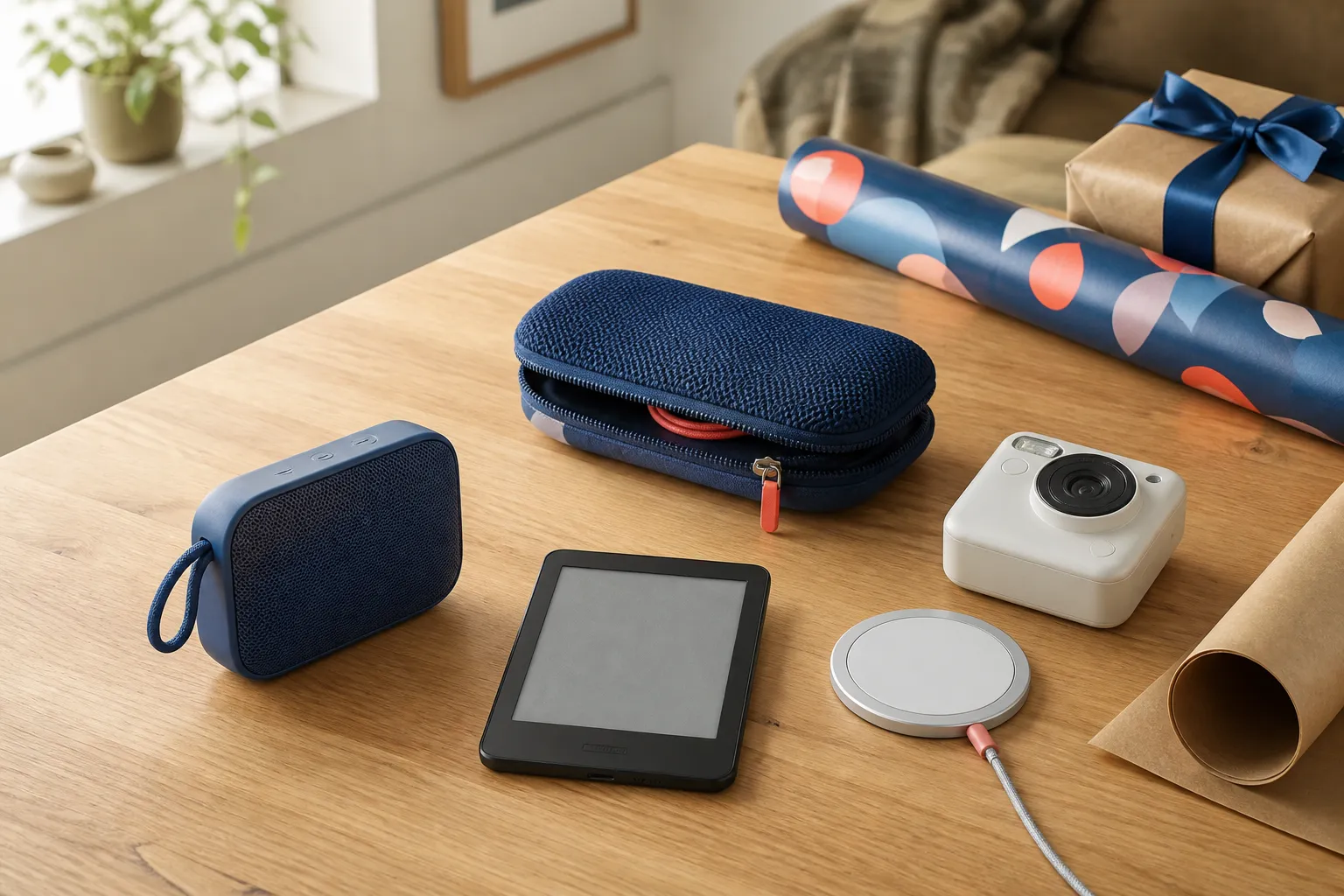
Useful Tech Gifts That Fit Into Real Life
Find a useful technology gift by starting with the recipient’s everyday routine, existing devices, available space and preferred controls.
Read buying guide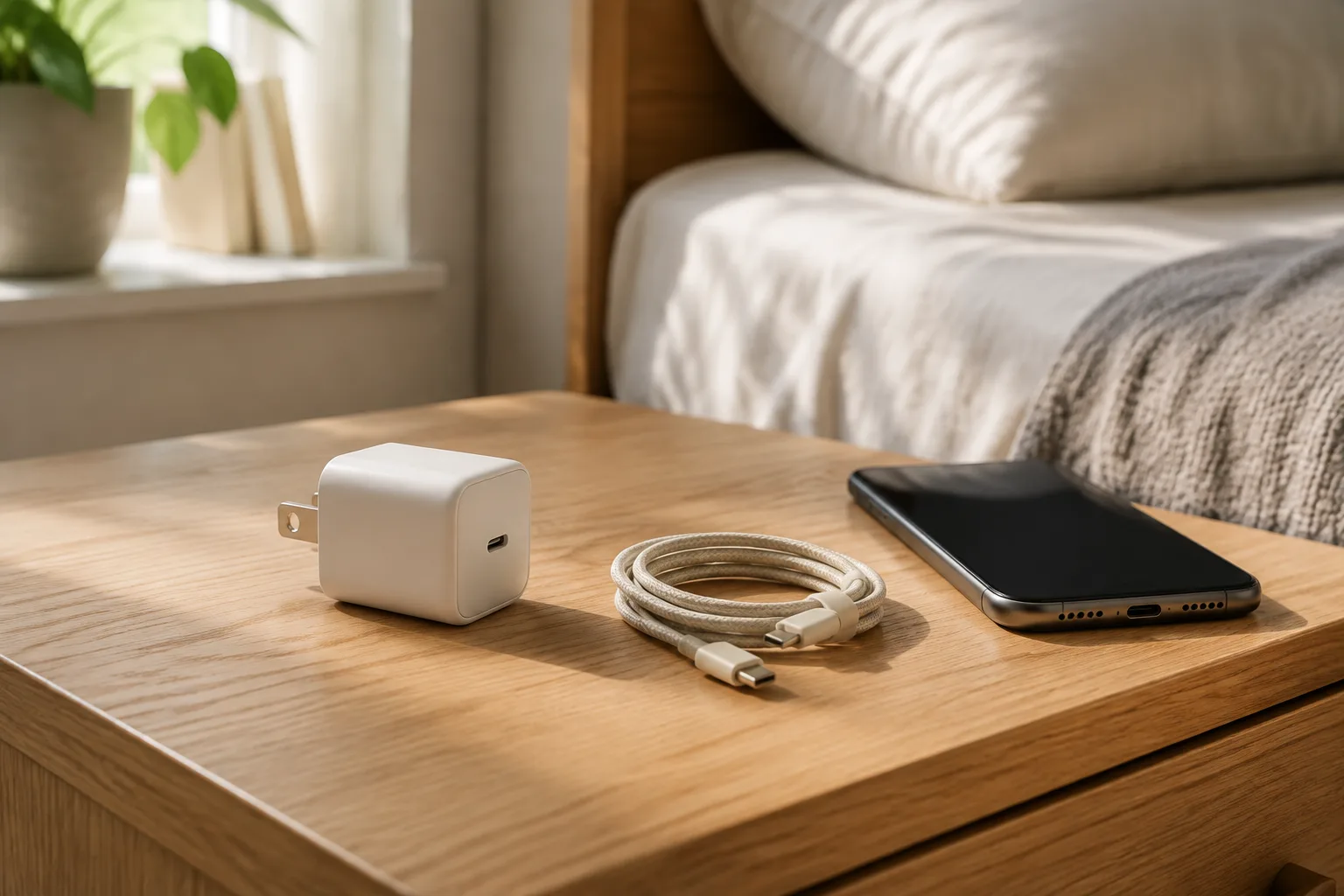
How to Choose a Phone Charger as a Useful Gift
Choose a phone charger by device requirements, supported charging profiles, shared port output, cable compatibility and safe placement.
Read buying guide