How to Pick a Portable Speaker as a Gift
Choose a portable speaker by listening space, controls, device connections, carrying shape, runtime conditions and water-care instructions.
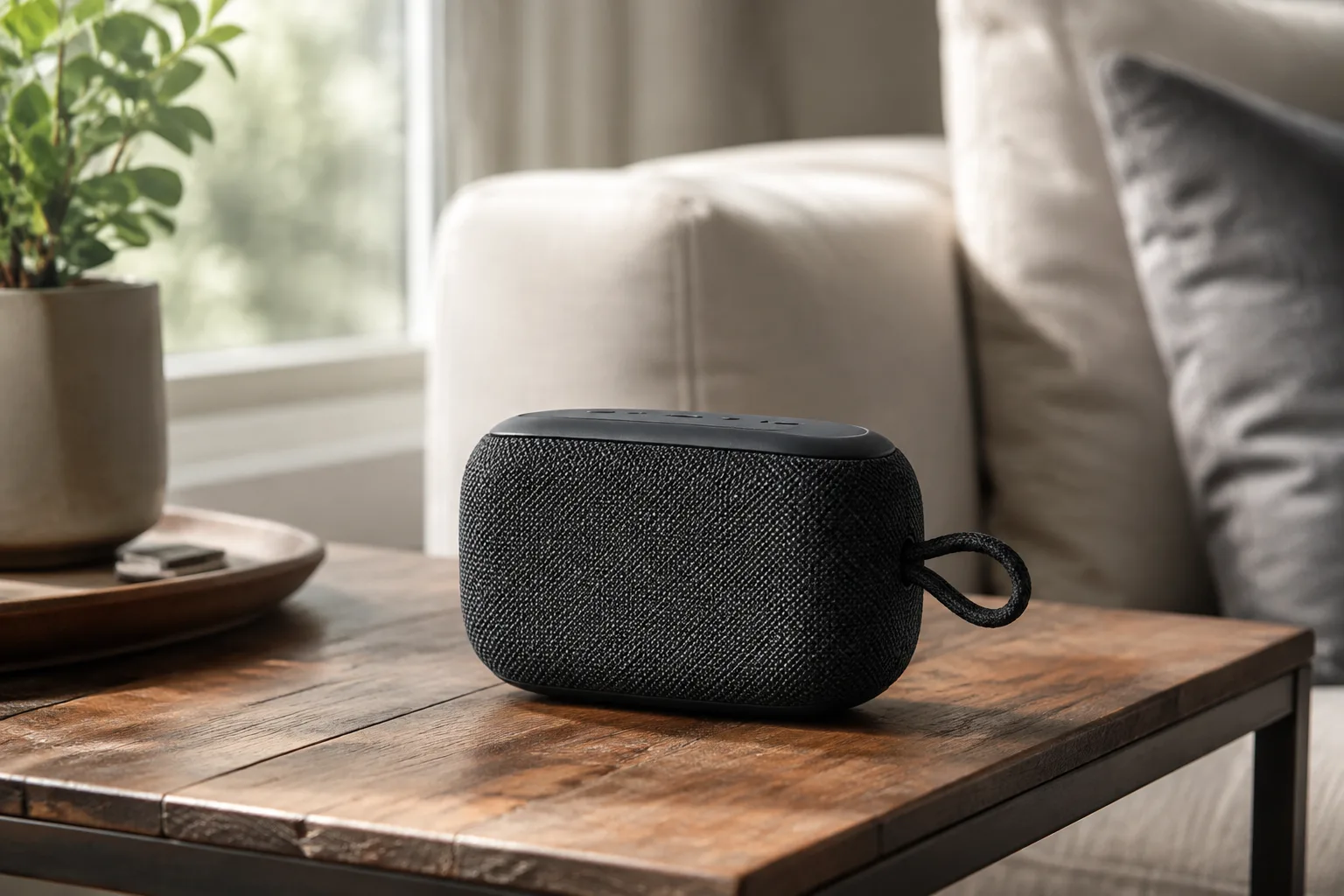
Choose a portable speaker gift by naming its most likely listening place, checking the bag or shelf it must fit, and confirming the recipient’s preferred way to start playback. Then compare battery claims, charging requirements and documented care limits. The right speaker for a quiet kitchen does not need to win an imaginary outdoor party.
Name the first place it will play
Imagine the first ordinary use after the gift is opened. Will the speaker sit beside a person listening to a podcast, play music while someone cooks, or come out of a bag at a picnic? Those situations change which controls, shape and connection matter. “They like music” is a useful starting point, but it does not tell you how the speaker should fit into their day.
Ask whether the recipient already has a preferred listening setup. A person with speakers they enjoy at home may still want something small for travel. Someone who mainly listens through headphones may have no desire to fill a shared room with sound. Do not treat a portable speaker as an automatic upgrade over the equipment they chose for themselves.
Write a brief that includes place, audience and storage: “For one person listening while cooking, kept on a narrow shelf, with physical playback controls.” That sentence gives you reasons to reject products. If you cannot write it without guessing, our routine-based technology gift guide can help decide whether audio is the right category.
Compare carrying shape as well as weight
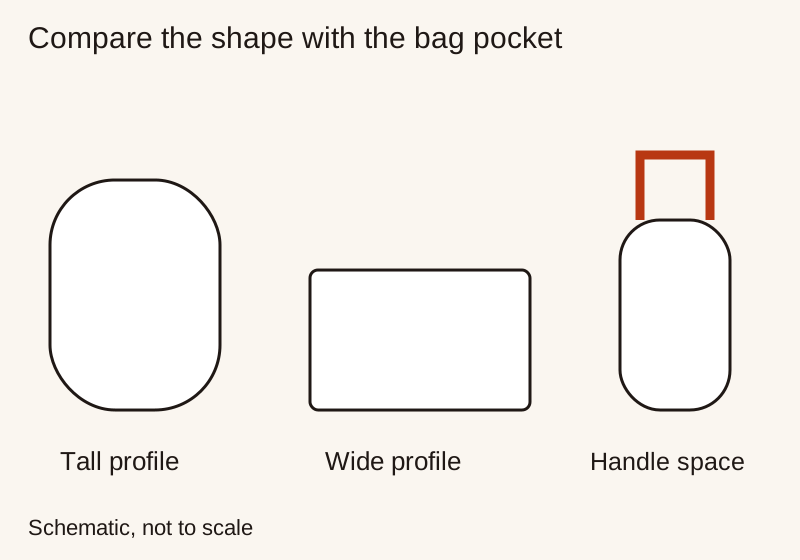
A speaker can be easy to carry in one bag and awkward in another. Look at all three dimensions, the shape of the body and any protruding handle or loop. A narrow cylinder, a flat rectangle and a handled box occupy space differently even when their listed weights are close.
Use the intended bag, not a product photograph, as the reference. Measure the available pocket after the recipient’s usual objects are inside. Leave room for the charging cable or protective case if those will travel too. A gift that fits only in an otherwise empty backpack has not passed a realistic portability check.
For a speaker that stays mostly at home, inspect its resting position instead. Does it sit securely in the orientation described by the manufacturer? Are controls accessible on that shelf? Can a cable reach without pulling the speaker toward the edge? Read any placement instructions rather than assuming that every pictured orientation is intended for everyday use.
Do not use maximum output as a sound-quality ranking
A power figure does not tell you whether the recipient will enjoy voices, instruments or music at their usual listening level. Use specifications to establish constraints and features, then use an audition where practical to judge the listening experience. Choose a seller that allows the recipient to audition the speaker at home.
If the recipient can join the decision, let them compare two finalists using familiar material at a comfortable level. Include spoken audio if they listen to podcasts, not only a dramatic music track. Ask whether the words remain easy to follow and whether they like the balance. Compare their preferences at the intended listening distance and volume.
For a surprise purchase, look for a seller whose actual return terms allow a meaningful check after opening. Read independent reviews for context, but distinguish measured observations from enthusiastic adjectives. A recording played through your own phone or headphones is not a direct audition of the reviewed speaker. Keep uncertainty visible rather than promising a sound character you have not heard.
Check the playback path the recipient will use
Find out what supplies the audio: a phone, laptop or an existing home system. Then verify that exact connection in the speaker documentation. A charging connector should not be assumed to accept audio, and a familiar brand name does not establish compatibility with another speaker the person already owns.
The Sonos Roam 2 product documentation illustrates the distinction between Bluetooth listening and additional home features using Wi-Fi and the Sonos app. That is a model-specific example, not a statement that all portable speakers offer both modes. For a shortlist, write down which mode supports the gift’s intended use and what is required to set it up.
If the goal is shared playback across rooms or two speakers playing together, confirm the supported combinations and mode. Do not assume that two speakers with Bluetooth, or even two products from the same brand, form the arrangement the recipient wants. Check the exact model names and the manufacturer’s current grouping instructions before buying a second device as an expansion gift.
For a speaker that also becomes part of a connected home, use our smart-home compatibility guide to check account ownership and household preferences. A travel speaker should not unexpectedly become an account-management project merely because the buyer likes an extra feature.
Read battery claims with their conditions attached
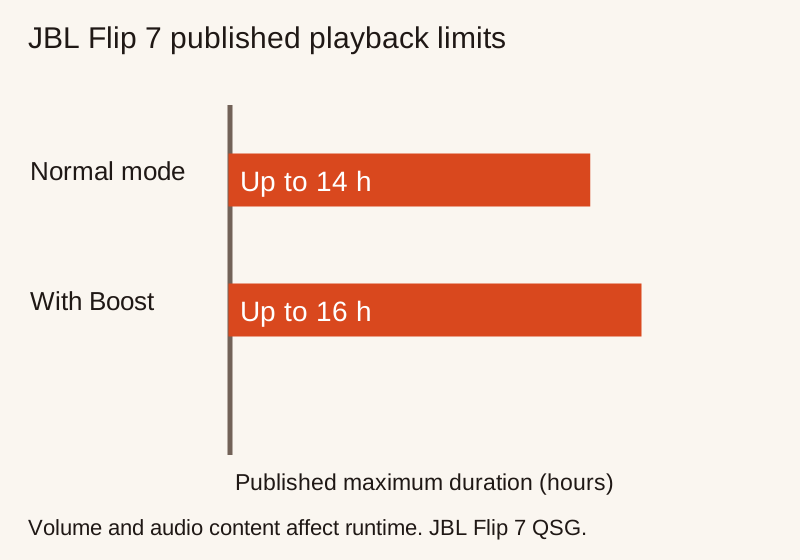
Treat the advertised runtime as a claim made under particular conditions. Look for the volume, operating mode and audio-content qualifications that accompany it. Compare normal playback separately from any battery-saving mode. Do not subtract two headline numbers and describe the result as a measured advantage when the test conditions differ.
For example, the JBL Flip 7 quick-start guide states up to 14 hours plus an additional two with Playtime Boost, dependent on volume and audio content. The point is not that this model will deliver that duration for your recipient. It is that the mode and caveat belong beside the number when you compare it.
Define the recipient’s actual session. A speaker used for an hour during dinner faces a different charging routine from one expected to last through a long outing. Ask when it can recharge and whether someone will remember to do so. A larger advertised reserve does not remove that ownership task.
Include the charging setup in the gift
Read the box contents. A cable and a wall adapter are different items, and neither should be assumed from a promotional image. Check the speaker’s input requirements against the adapter the recipient actually owns. If the needed equipment is missing, include it in the complete cost or choose a different candidate.
The same JBL guide notes that its USB cable is not included. That detail is specific to the documented package; regional bundles should still be checked. It shows why the unboxing list matters even for a product whose connector looks familiar. A gift note saying “ready for the weekend” is premature if the required charging setup has not been established.
Think about where recharging will happen. A removable cable may be easier to replace or pack, while a dedicated dock can be convenient for a speaker with a permanent home. Neither arrangement is universally preferable. If the recipient expects to charge away from an outlet, our power bank guide explains how to investigate the full connection without guessing compatibility.
Read water-resistance limits in the care instructions
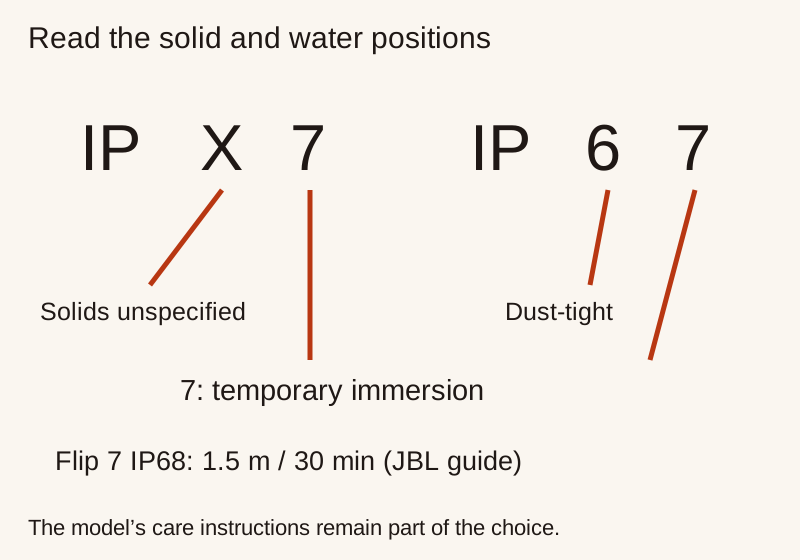
Do not treat “waterproof,” “rugged” or an IP label as permission for every outdoor situation. Read the exact model’s instructions for exposure, storage, cleaning and charging. The speaker and its charging accessories may have different restrictions. Avoid transferring a care rule from a similar-looking model to the one you intend to give.
Sonos’s Roam water and dust resistance guidance, which includes Roam 2, provides a useful example. It advises indoor storage between uses, discourages salt-water exposure and says the charging accessories are not weather resistant. It also requires dry, clean charging connections. Those limits are more useful to a gift buyer than a broad impression created by an outdoor photograph.
If the intended setting conflicts with the care instructions, remove the candidate from consideration. Do not reinterpret a restriction because the recipient is careful or the packaging looks adventurous. Include a concise pointer to the manual with the gift, and leave any product-specific cleaning or drying procedure to the manufacturer’s instructions rather than improvising one.
Make the basic controls easy to understand
Look at the controls used every day: power, volume, play or pause and connection. Are they separate and identifiable? Does an ordinary action require a long press or a sequence the recipient would have to remember? Read the control diagram and compare it with the person’s preferences, particularly if they have asked for a simple device.
An app may offer useful settings without being something the recipient wants to open each time they listen. Establish which desired functions are available directly on the speaker and which require the app. If microphones or voice features are present, ask whether the recipient wants them and how the manufacturer says they are controlled. Do not equate more available features with an easier gift.
Consider handover as part of usability. If several people might supply music, check the documented pairing and reconnection process. Avoid setting the speaker up under your own account before giving it. Offer help after opening so the owner can choose the name, permissions and settings that make sense to them.
Finish with a shortlist of two
Compare each finalist on the same brief: listening place, packed dimensions, preferred connection, normal-mode runtime claim with caveats, complete charging kit and relevant care limits. Add one sentence describing the compromise. If an essential feature remains undocumented, mark it unknown instead of awarding optimistic points.
Our gadget comparison framework helps separate those essential checks from preferences such as color. For a speaker intended mainly for a workstation, the desk gift guide helps check the shelf, controls and cables around it. These supporting checks should make the choice smaller and clearer, not create another list of accessories to buy.
Choose the option whose compromise the recipient is most likely to accept. A compact speaker may be the right travel gift even if it is not the centerpiece for a gathering. A home-focused portable model may make sense for someone who values their existing system. Keep the receipt and let the recipient evaluate the sound in the place where it will actually be used.
Research and update note
Related Gift Buying Guides
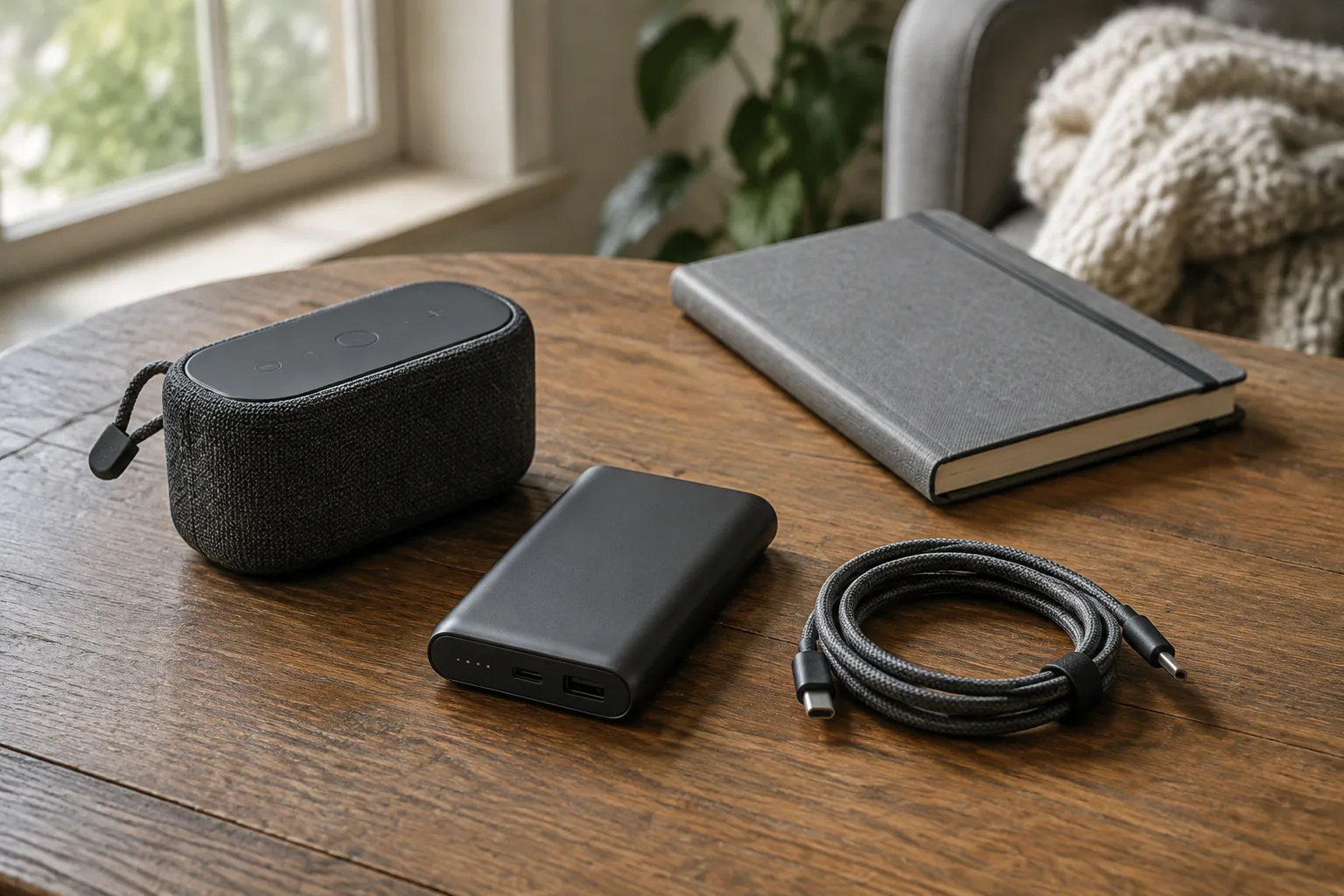
Compare Gadget Gifts by Routine, Compatibility & Complete-Kit Cost
Compare technology gifts by the recipient’s routine, device compatibility, physical fit, complete cost and return options.
Read buying guide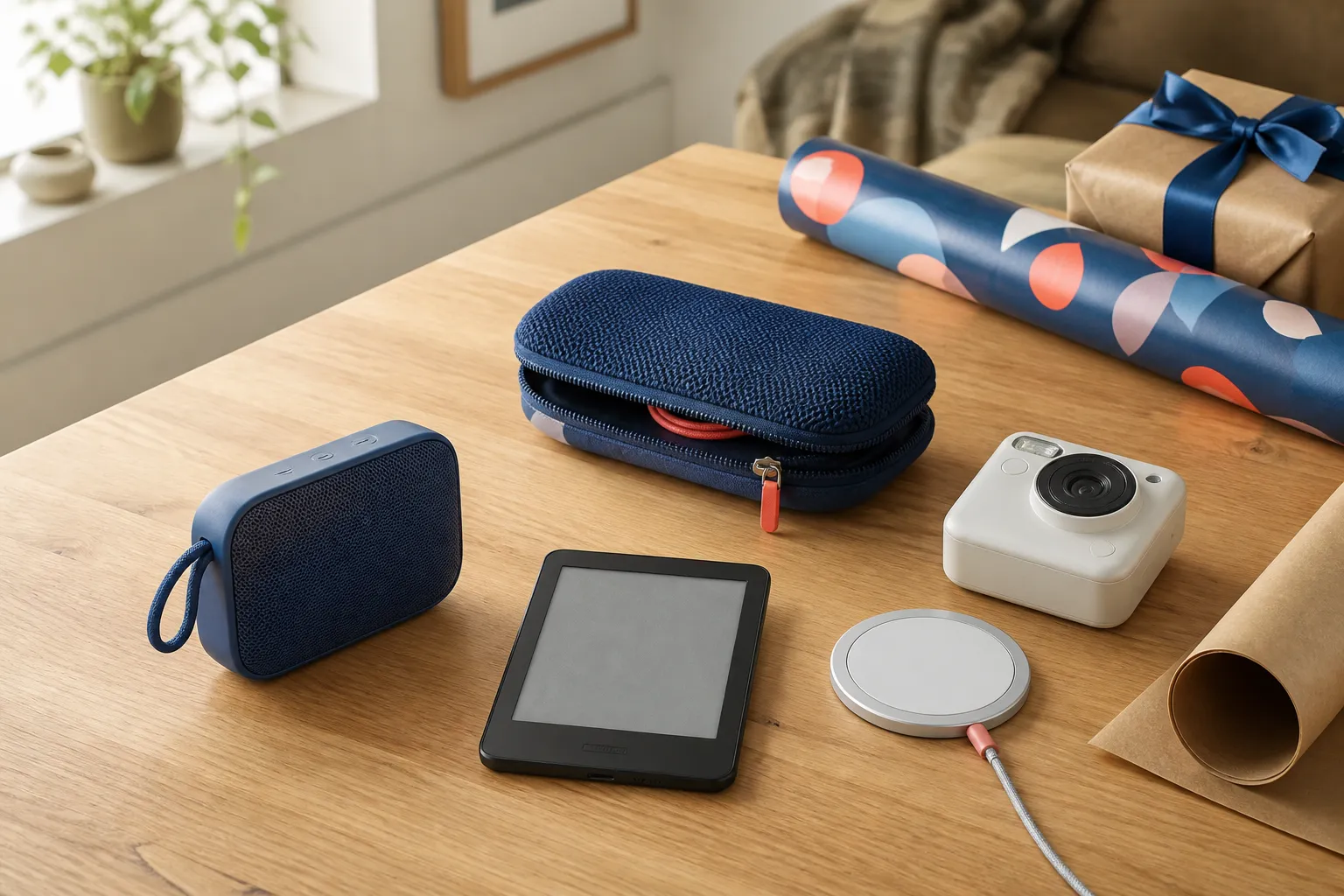
Useful Tech Gifts That Fit Into Real Life
Find a useful technology gift by starting with the recipient’s everyday routine, existing devices, available space and preferred controls.
Read buying guide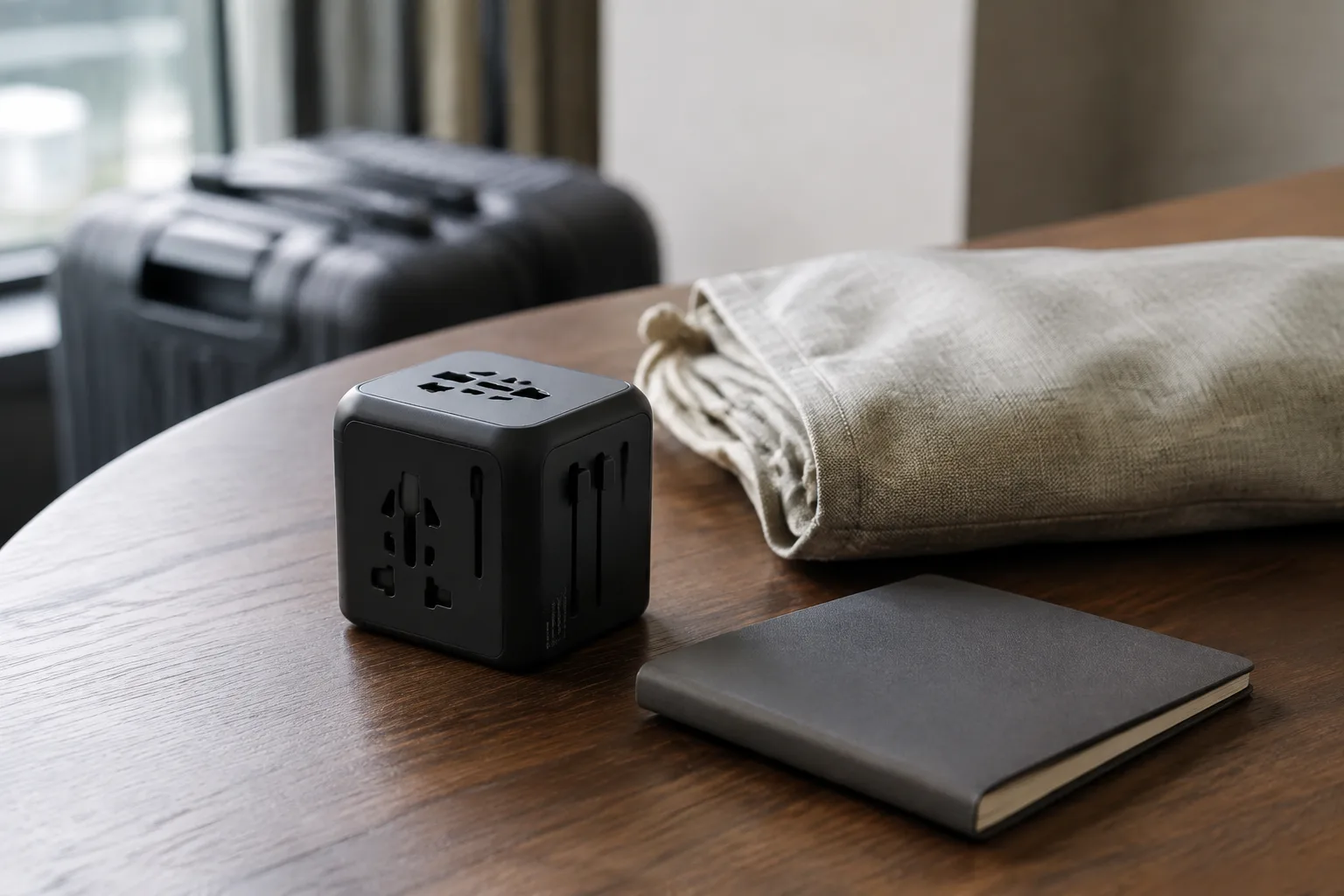
How to Choose a Travel Adapter as a Useful Gift
Choose a travel adapter by destination socket, appliance input label, earth connection, rated load and any required USB charging output.
Read buying guide